

Introduction
If your puppy is suddenly chewing furniture, biting your hands, or gnawing on shoes nonstop, teething is likely the reason. Just like human babies, puppies go through a teething phase that can be uncomfortable, frustrating, and sometimes painful.
Understanding the best puppy teething remedies can help you protect your belongings while keeping your puppy comfortable and healthy during this important stage of development.
In this complete guide, you will learn:
- When puppies start teething
- Common teething symptoms
- Safe chewing solutions
- What to avoid
- Training tips for biting behavior
- Veterinary warning signs
- Best toys and home remedies
Whether you are a first-time dog owner or raising another puppy, this article will help you survive the teething stage with less stress and fewer destroyed shoes.
What Is Puppy Teething?
Puppy teething is the natural process where baby teeth fall out and adult teeth grow in.
Puppies are born without visible teeth, but their baby teeth begin appearing around 2 to 4 weeks of age. Later, those baby teeth are replaced by permanent adult teeth.
This transition can cause:
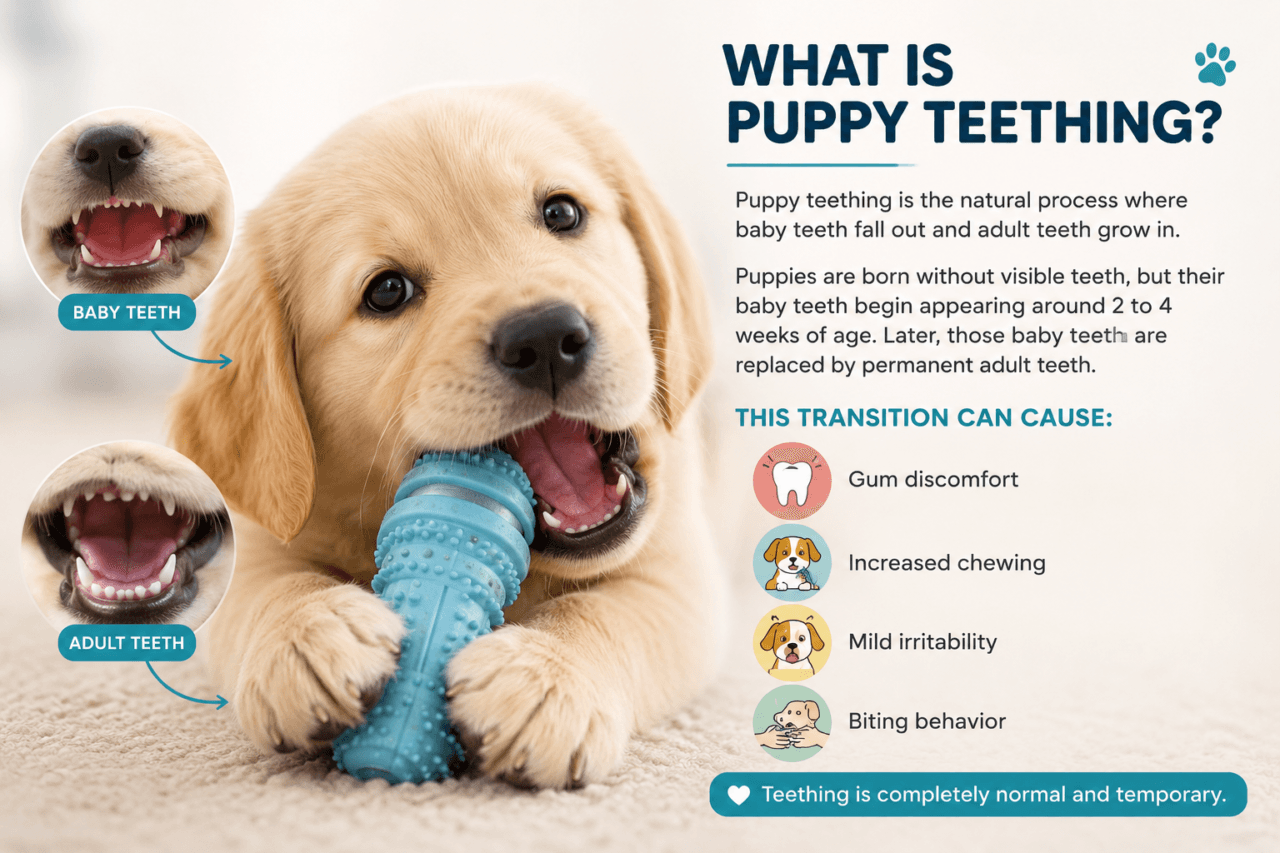
- Gum discomfort
- Increased chewing
- Mild irritability
- Biting behavior
Teething is completely normal and temporary.
Puppy Teething Timeline
Understanding the timeline helps you know what to expect.
2–4 Weeks Old
Baby teeth begin emerging.
6–8 Weeks Old
Most puppies have a full set of baby teeth.
3–4 Months Old
Baby teeth begin falling out.
4–6 Months Old
Adult teeth replace baby teeth.
Around 7 Months Old
Most dogs have all 42 adult teeth.
Large breeds may teethe slightly later than small breeds.
Common Puppy Teething Symptoms
Every puppy experiences teething differently, but these signs are very common.
Increased Chewing
Puppies chew to relieve gum pressure.
They may target:
- Furniture
- Shoes
- Table legs
- Clothing
- Electrical cords
Excessive Biting or Nipping
Teething puppies often bite hands during play because chewing relieves discomfort.
Red or Swollen Gums
Mild gum inflammation is normal during teething.
Drooling
Some puppies drool more than usual during active teething periods.
Missing Teeth
You may occasionally find tiny baby teeth on the floor — or your puppy may swallow them harmlessly.
Mild Irritability
Some puppies become temporarily more restless or moody.
Best Puppy Teething Remedies
If you are searching for effective puppy teething remedies, these are the safest and most recommended options.
1. Frozen Chew Toys
Cold temperatures help numb sore gums.
Best Options
- Frozen puppy-safe chew toys
- Frozen washcloths
- Chilled rubber toys
Avoid toys that become rock-hard when frozen.
2. Puppy Teething Toys
Special teething toys are designed to soothe gums safely.
Look For:
- Soft rubber materials
- Textured surfaces
- Durable but flexible construction
Avoid overly hard bones that may damage teeth.
3. Frozen Carrots
Frozen carrots can provide relief and are low-calorie treats for many puppies.
Always supervise chewing to prevent choking.
4. Rotate Toys Frequently
Puppies get bored quickly.
Rotating toys every few days keeps them mentally stimulated and reduces destructive chewing.
5. Redirect Biting Immediately
When your puppy bites your hands:
- Stop play briefly
- Redirect to a chew toy
- Reward appropriate chewing
Consistency is critical.
6. Use Positive Reinforcement
Praise your puppy when they chew acceptable items instead of furniture or hands.
Reward-based training works far better than punishment.
What NOT to Give a Teething Puppy
Some items can damage teeth or create choking hazards.
Avoid:
- Cooked bones
- Ice cubes
- Hard antlers
- Sharp plastic toys
- Old shoes
- Rawhide from questionable sources
If a toy is harder than your fingernail, it may be too hard for puppy teeth.
How to Stop Puppy Biting During Teething
Teething and biting often happen together.
Step-by-Step Training Method
1. Stay Calm
Do not yell or hit your puppy.
2. Stop Interaction Briefly
If biting becomes excessive, pause play for 10–20 seconds.
3. Redirect to Toys
Always offer an approved chew item.
4. Reward Gentle Play
Praise calm behavior immediately.
5. Be Consistent
Everyone in the household should follow the same rules.
Puppies learn through repetition.
Best Types of Toys for Teething Puppies
Choosing the right toys can save your furniture.
Rubber Chew Toys
Durable and soothing for gums.
Rope Toys
Helpful for supervised chewing and tug games.
Puzzle Toys
Provide mental stimulation alongside chewing relief.
Treat-Dispensing Toys
Keep puppies occupied longer.
Signs of Problematic Teething
While teething is normal, certain symptoms require veterinary attention.
Contact Your Vet If You Notice:
- Severe bleeding
- Refusal to eat
- Broken teeth
- Swollen face
- Persistent bad breath
- Adult teeth growing beside baby teeth
- Extreme pain or crying
Retained baby teeth sometimes need veterinary removal.
How Long Does Puppy Teething Last?
Most puppies finish teething around 6–7 months old.
However:
- Chewing habits may continue longer
- Adolescent dogs still need mental stimulation
- Training remains important
Patience is key during this phase.
How to Protect Your Home During Puppy Teething
Teething puppies are curious and destructive if unsupervised.
Puppy-Proofing Tips
Remove Dangerous Items
Keep shoes, chargers, and cords out of reach.
Use Baby Gates
Restrict access to unsafe areas.
Supervise Closely
Especially during active teething months.
Provide Enough Exercise
Tired puppies chew less destructively.
Crate Train Properly
A safe resting space prevents accidents.
Mental Stimulation Helps Reduce Chewing
Many owners underestimate the importance of mental exercise.
Great Mental Enrichment Activities
- Snuffle mats
- Basic obedience training
- Food puzzles
- Scent games
- Short training sessions
Mental fatigue often calms destructive behaviors.
Frequently Asked Questions (FAQs)
At what age do puppies start teething?
Most puppies begin teething around 3 to 4 months old.
Is puppy biting normal during teething?
Yes. Puppies naturally bite and chew to relieve gum discomfort.
Can puppies lose appetite while teething?
Some puppies may eat slightly less temporarily due to gum soreness.
Are frozen treats safe for teething puppies?
Yes, as long as they are puppy-safe and appropriately sized.
When should puppy biting stop?
Most puppies improve significantly by 6–7 months with consistent training.
Can teething make puppies aggressive?
Teething itself does not cause aggression, but discomfort may make puppies more irritable.
Final Thoughts
Teething is one of the most challenging stages of puppyhood, but it is also temporary. By using safe puppy teething remedies, proper training, and consistent supervision, you can guide your puppy through this phase successfully.
Remember:
- Chewing is normal
- Redirection works better than punishment
- Mental stimulation matters
- Patience and consistency are essential
With the right approach, your puppy will grow into a happy, healthy, well-behaved adult dog.